The best business phone systems unify conversations and streamline administration. For a small company, the right platform can deliver significant returns by enhancing customer experience and boosting employee productivity. We’ve tested dozens of voice-over-internet-protocol (VoIP) phone services rigorously to identify their strengths and weaknesses. Start your research confidently by comparing solutions and reviewing our comprehensive buyer’s guide.
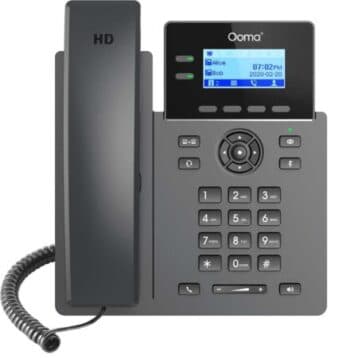
Having a top-notch business phone system is vital to ensuring your organization can communicate effectively both internally and externally. Source: Ooma
Cloud-based phone systems typically cost $10 to $75 per user, per month. Many office phone and UC system providers have several service plans that vary in price and features. Restaurants and retail shops use a mix of dedicated and shared VoIP numbers while remote team members may require metered or unlimited phone lines. Some providers allow companies to mix and match subscriptions, ensuring each employee has access to the tools they need.
Most vendors ask for annual prepayment or extended contract terms for the lowest pricing. A long-term agreement can result in early termination fees if you cancel before it expires or forget to stop the auto-renewal, which is relatively standard. These costs can be significant, especially if you participated in a promotion for free desk phones or headsets.
Since the hosted PBX equipment is stored in the cloud, there are usually no large installation or setup costs. Unlike a traditional office phone system, modern phone services work with your existing hardware, such as tablets, cell phones and computers. Softphone apps and browser-based programs provide full business phone functionality.
Several multiline business phone systems sell or lease hardware with service plans. Renting phones can reduce capital costs but most experts recommend purchasing them outright. Buying them through the phone provider does have its benefits as it’s often preprovisioned for your account.
Business phone systems are full of valuable features and tools. Some VoIP providers offer only a few dozen features while others have over 100.
Metered or Unlimited Calling
Most VoIP phone services today allow unlimited incoming and outgoing calls. However, this usually only applies to domestic calls and calls using local phone numbers. Many providers impose extra charges and restrictions for toll-free calling. In addition, some cloud phone systems offer metered extensions or pay-as-you-go phone lines.
Voicemail Options
Business phone systems may offer shared and individual voicemail boxes. Most let users check messages from anywhere. VoIP providers also offer visual voicemail and voicemail-to-email. The former displays a list of your voicemails and you can listen to them in any order while the latter sends an email with your message as an audio attachment. Voicemail transcription is another popular feature but availability varies according to the service plan.
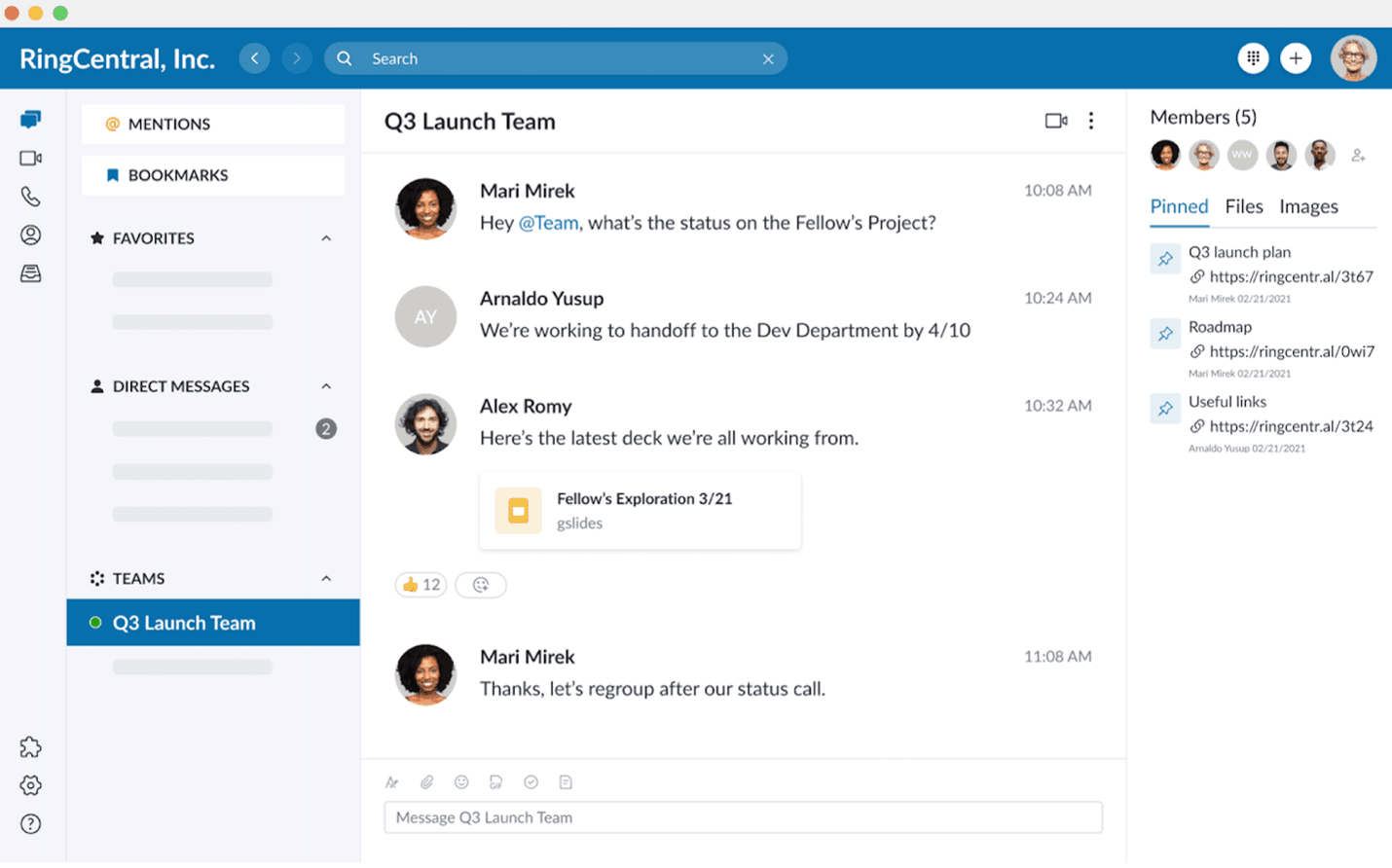
Most business phone systems offer users the ability to read their voicemail messages directly from their desktop or mobile app. Source: RingCentral
Caller ID
This basic function shows the number of the person calling you. The caller ID appears on desk phones or through a softphone on your computer or mobile device.
Speed Dial
Instead of dialing a seven-digit number, you can push one button to connect to the numbers you call most. This feature applies to desk phones but many softphone apps provide a favorites list for your most-used contacts.
Did You Know?Did you know
Softphone apps connect your tablet, computer or cell phone to your business phone service. This software provides a keypad and other call handling features for placing a caller on hold or transferring them to a co-worker.
Personal and Company Directories
A personal directory is an easy way to manage your contacts. It gives you access to your contacts’ phone numbers whenever needed. A company directory displays every employee (and their contact information).
Do Not Disturb
When working on a big project or important task, you can put your phone in this mode to prevent interruptions. Your phone will not ring and all callers are sent directly to voicemail.
Single and Multilevel Automated Attendants
An auto attendant answers calls to your business, plays a greeting and directs the caller to the person or department they are trying to reach automatically. Advanced systems may offer multilevel auto attendants, which offer more extensive options, including transferring the caller to another auto attendant or IVR system.
Even small businesses benefit from using a virtual receptionist to improve experiences. Automated attendants can answer lines promptly during peak hours. The systems also handle after-hours calls and reassure clients that you will receive their messages and respond upon opening.
On-hold Music
You can choose the music callers hear while they wait on hold. Most vendors offer prerecorded tracks while others let you upload a custom music playlist, which may include messages for callers.
Paging
You can use your phone to send messages to everyone, similar to a traditional intercom system. Certain services can also connect your VoIP system to a physical paging system.
Call Flip
This option allows users to move seamlessly between devices while on a call without putting the caller on hold. It’s ideal for business owners who run their company from a smartphone or anyone who shifts between mobile and desktop devices frequently.
Presence
The presence status shows employees whether their colleagues are on a call or available to chat. Some solutions let users choose a status like out-of-the-office, away from my desk or in a meeting.
Call Reports
Call logs provide basic analytics on your company’s phone usage. You can often break down usage statistics by filters, such as by employee or department.
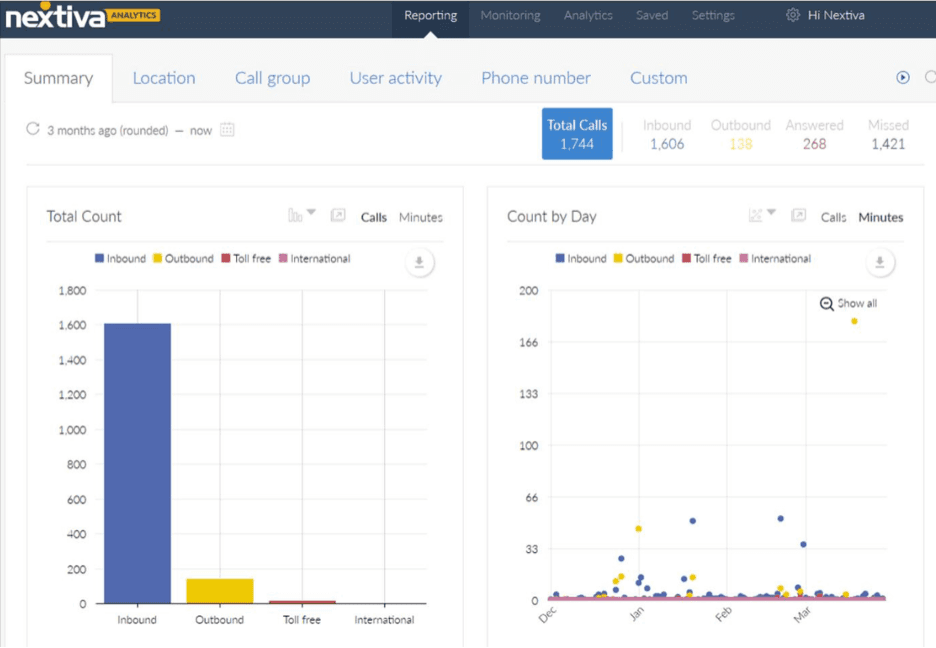
Business phone systems include various reports and analytics that give businesses better insight into the calls their organization is making and receiving. Source: Nextiva
Online Management
All VoIP systems can be managed in an online portal. From the dashboard, you and the other administrators can add users, set phone numbers, review call reports, create ring groups and see monthly statements. Employees can also access the portal to check their voicemail, view a company directory and set call forwarding routes.
Online admin tools centralize emergency management. Some systems let employers establish 911 locations and forwarding rules for internet outages. These tools are critical to business continuity and disaster prep planning.
Call Forwarding
Your office phone can forward calls to another number automatically. This could be a mobile phone, another employee’s line or an external VoIP or analog phone.
Extension Dialing
Employees can dial a co-worker by a three-, four- or five-digit extension instead of their entire phone number.
Call Recording
Many cloud-based phone systems give you the ability to record your calls. Depending on the phone provider and administrator settings, this feature may be on-demand or automatic.
Ring Groups
You can create ring groups for employees who answer calls from the same group of customers. For example, your customer service team might have its own ring group. The entire group is notified when a caller asks to speak to a customer service representative.
Call Queues
This tool is typically used in call centers or companies with high call volumes. However, even small businesses like restaurants can use this feature during peak hours to manage phone orders. It puts callers “in line” so that their calls can be answered when operators become available.
Speakerphone
Many IP phones include a speakerphone option that allows you to speak to a caller without using the phone’s handset.
Call Transfer
Employees can quickly transfer calls to their colleagues. Some solutions offer warm transfers, which let you speak with your co-worker before passing the call.
Audio and Video Conferencing
Top-rated phone systems typically support three-way calling, one-to-one video meetings or larger conferences on one or more service plans. Native online meeting technologies let your team convert a chat or voice conversation into a video call with one click.
Team Messaging and SMS
Most business phone systems offer SMS/MMS text messaging options and team chat tools. Employees can use softphone or browser-based apps to communicate one-on-one or in groups. The team messaging services usually support file sharing while business texting solutions may vary by subscription.
Due to text messaging laws and regulations, many VoIP providers no longer offer unlimited texting with service plans. Clarify the limitations and overage fees before choosing a phone system.
The best business tools and technology are those that seamlessly integrate into existing workflows and enhance communications. However, what may work for a solopreneur or small team might not meet the needs of a small to midsize business. Given that your phone service is a vital business technology, it’s crucial to compare your options and consider several factors before making a decision.
1. Develop your use cases.
Decide who will use your business phone service, what they will use it for and where. List employees and their locations (on-site, remote or hybrid). Identify specific communications requirements, such as the ability to host video conferences or share files. Also, determine which team members need hardware, such as desk phones or headsets.
2. Evaluate your options.
Consider the differences between phone systems and determine whether you want an on-premise or cloud-based service. Estimating short- and long-term costs for each approach is a good idea. Remember to factor in phone equipment and international calling expenses.
Next, go through user reviews on third-party sites and the Better Business Bureau. Look for guides that break down differences among services. Also, request recommendations from professional groups. After researching solutions, develop a list of potential vendors.
3. Review pricing and features.
Use a spreadsheet or project management tools to compare providers. Enter features, prices and any standout capabilities. Also, note customer support options and see if the vendor offers additional integrated programs, such as webinar, event or call center software.
4. Set up demonstrations and trials.
Several business phone services provide on-demand demos in exchange for your contact details. Others will set up a meeting where company representatives answer your questions and walk through various functions based on your specific use cases.
Also, take advantage of free trials. This allows your team to test the mobile and desktop applications, different features and admin panel. Remember to interact with customer support to assess response times and agents’ familiarity with the system.
5. Request input from your team.
Once you’ve documented each company’s details and tested the software, ask your team to weigh in. Encourage them to share their experiences and concerns. With their input, decide what training your employees will require and how this impacts your decision. Look for a VoIP service that fits your budget while serving the needs of your staff.
Cloud-hosted phone services improve customer experiences while increasing efficiency. A professional phone number boosts a solopreneur’s credibility in the eyes of consumers while automation features fuel a small team’s productivity.
Lower Costs
Many companies switch to VoIP to save money. Unlike an on-premises system, your business isn’t responsible for server maintenance or upgrades. A cloud service’s flexibility means you don’t necessarily need hardware. Employees can use their existing computers or cell phones for free or add an analog telephone adapter to connect traditional desk phones.
Better Customer Experiences
Advanced features like auto attendants and customer relationship management (CRM) integrations translate into satisfying customer experiences. Clients can reach the correct department or select an employee by name through the company directory. Likewise, employees see ring group details (the line your caller chose) and customer information, such as when they last called or their survey results. This enables your staff to personalize their greeting and meet customer expectations.
Scalability
With a VoIP phone service, you can add or remove lines, features and user permissions from the admin dashboard. Call reports provide insights about call volumes and missed calls, which informs scheduling and hiring decisions. These capabilities help small businesses scale operations to meet demand.
Increased Productivity
The best business phone systems of 2024 unify business communications, resulting in less application switching. They also provide virtual receptionists and IVR menus, reducing call transfers. AI-powered tools can generate voice and video summaries, highlight action items and track assigned task progress. Moreover, admins can schedule recurring reports to keep leaders abreast of call volumes without performing the same steps weekly or monthly.
Boost productivity by selecting a phone system that offers task management, collaboration, integrations and video services. This will reduce the time your employees spend toggling between programs, which studies show creates inefficiencies.
Here are several more business phone systems that might be a good fit for your needs.
Vonage
Vonage stands out for its customization due to its a la carte features, pay-as-you-go APIs and low-code or no-code design tools. It offers over a dozen add-ons to expand your capacity during peak season. With a couple of clicks, you can add metered or unlimited extensions, call queues or call recording. Likewise, we appreciate the free trial credits and sample code to embed the voice and message APIs.
A nice aspect of Vonage is that it’s subscriptions differ from rivals because it doesn’t include every feature. If an employee doesn’t require desk phone or fax functionality, there’s no need to pay for it. We were impressed with the range of add-ons. It has standard and advanced options, from a popular shared business inbox to an AI virtual assistant. Learn more in our Vonage review or visit the Vonage website directly.
OpenPhone
OpenPhone is a versatile virtual phone system. Its unified inbox and conversation features align remote teams, allowing them to deliver exceptional customer experiences. We were pleased that it offers an economical base plan with business hours routing and shared inboxes while the step-up tier adds phone menus. Time-saving auto-responses, snippets and voicemail transcripts come with all plans.
We were impressed by the unified conversations and internal threads features. Shared spaces track all communications and group them into active, unread and unresponded categories, ensuring no customers fall through the cracks. Distributed workers can view the entire interaction history on individual records, including call transcripts, voicemails and text messages. Internal conversations appear here also and team members can @mention each other to request additional context or status updates.
Grasshopper
Grasshopper’s unique offering sets the platform apart from competitors. It doesn’t aim to replace your current office PBX system or transform how you handle calls. Instead, Grasshopper provides one or more business phone numbers and softphone apps with the fundamentals, plus a few perks. Depending on the plan, you can forward calls to one or more co-workers without per-user fees.
With softphone apps for desktop computers and mobile devices, professionals can use Grasshopper for cellular, Wi-Fi and VoIP calling. It works particularly well for partnerships or small teams covering low-volume phone lines. When customers call your number, Grasshopper forwards it to the first provided call forwarding number. If that line is busy or doesn’t pick up, the virtual service tries the next available forwarding number automatically.
800.com
Rather than a complete phone service like some others on this page, 800.com is a provider of 1-800, vanity and local phone numbers. This service allows small business owners the ability to separate their personal and business calls. 800.com offers three service plans, each of which includes a fax number, call recording, text messaging, analytics, voicemail transcription and a variety of call-forwarding options.
Multichannel communications are here to stay. VoIP providers recognize that businesses want unified platforms, not dozens of subscriptions to siloed products.
VoIP Market Growth
Internet-based phone services will continue to grow rapidly in 2024. MarketWatch estimates that the global cloud PBX market will grow at a compound annual growth rate of 13.54 percent, from $14.93 billion in 2023 to $36.33 by 2030.
As phone vendors phase out landline service and internet service providers roll out fiber optics to more U.S. regions, we expect a growing number of small business leaders will shift to online communications. The draw of artificial intelligence and machine learning tools and the desire for data also increase interest in the VoIP market.
U.S.-based infrastructure improvements could fuel VoIP adoption among small businesses in less connected areas. In 2024, U.S. states will finalize their Broadband Equity, Access and Deployment proposals and expand broadband access, potentially increasing internet speed and reliability for many workforces.
Mergers, Acquisitions and Strategic Partnerships
Communications companies partner with third parties to improve integrations and work toward shared objectives. Meanwhile, acquisitions give vendors access to technologies that complement their platform and vision.
Recent collaborations include:
- Nextiva Acquires Thrio: In 2024, Nextiva purchased the AI-powered contact center solution Thrio to improve its customer experience offerings.
- Vonage and Verizon collaboration: In 2024, the providers agreed to develop new APIs together and Verizon will offer its network APIs on Vonage’s platform.
- Zoom and Lumen partnership: In 2023, the companies announced that their agreement would simplify integration and offer Lumen Solutions for Zoom.
- RingCentral buys Hopin’s Virtual Events Assets: In 2023, RingCentral acquired technology and talent from Hopin, the all-in-one event and audience engagement platform.
- Ooma acquires 2600Hz: In 2023, Ooma bought its key supplier, 2600Hz, which will generate recurring revenue, provide control over its technology stack and expand its market.
- Nextiva purchases Simplify360: In 2023, Nextiva acquired Simplify360 to leverage technologies for reputation management, helpdesk CRM, social media and live chat.
Emerging Technologies Driving VoIP Feature-Sets
As noted in our best business phone system reviews, several providers updated their VoIP services to leverage emerging technologies, such as generative AI. We expect communications platforms to prioritize these capabilities by enhancing their AI offerings as we’ve seen with RingCentral and Dialpad.
Look for vendors to offer AI tools to summarize chat threads and improve data analytics. Another trend is that more platforms integrate call center and event technologies and provide them as add-ons to VoIP systems. We also expect continued investments in platform integrations and security.