Accounting software is your secret weapon for keeping your company’s finances in shape, from those early startup days to conquering growth and beyond. The best accounting software feels like a perfect fit – it’s easy on the wallet, a breeze to use, and plays nicely with the other apps you already rely on. We know wading through hundreds of options can be overwhelming, so we took a deep dive for you. That’s why we scoured all the top contenders, dissecting features, pricing, fees, and reputations to bring you the best accounting software picks for business owners.
Zoho Books
Small business owners must contend with a long to-do list, which is why automating financial processes makes life much easier. We like that Zoho includes a smorgasbord of automation features, including tools for workflow, invoice reminders, in-app notifications and a scripting language to create custom functions. That emphasis, as well as the strong slate of standard accounting and bookkeeping tools, makes Zoho our best pick for automating processes.
Wave Financial
If you’re a freelancer or the owner of a small business that doesn’t store much inventory, we think that you should consider Wave as a free option. With Wave, there are no monthly or annual fees or software license, although add-on services cost extra. This gives you the flexibility to start using the software with no upfront cost and add features only as you need them. We found that Wave provides a solid slate of basic features and is easy to use, making it our choice as the best free accounting software
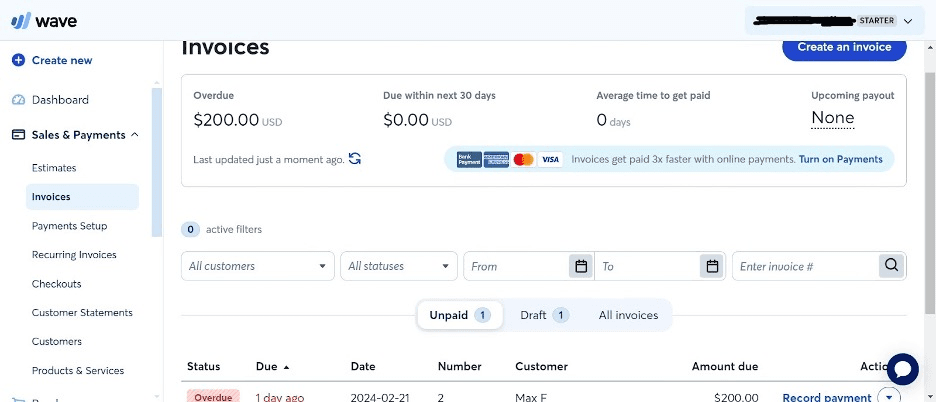
Wave Accounting is one of the few free accounting software providers. Source: Wave
Melio
Some businesses just need a simple way to manage A/P and A/R. They don’t want an overly complicated or costly system. All they need is software to send and track invoices and ensure that they get paid. That’s why we included Melio and its free A/P software as our best pick for bill management. In our view, Melio may not be well suited for large companies, but it’s ideal for small businesses looking for a free payment management solution. During our testing, we found that adding vendors and scheduling payments from Melio’s network of 7,000 vendors was a breeze.Add integration with QuickBooks to the mix, and it’s easy to see why Melio is our best pick for bill management.
Plooto
To scale up your business, you need to spend less time on tedious tasks, such as A/P and A/R. Plooto is an all-in-one payment platform that provides greater financial control and simplicity by unifying payments, approvals, reconciliation and reporting. We appreciate that Plooto’s workflow automation reduces errors, expedites your A/P process and improves how vendors get paid. It also offers end-to-end A/P and A/R automation, which is why it’s our choice as the best accounting software for payments.
Neat
Neat is accounting software that provides all the bookkeeping and invoicing basics. Originally known for its text-parsing technology, Neat deftly incorporates financial document management into its accounting offerings. Despite the rise of electronic recordkeeping, some business owners – either by habit or necessity – may still deal with large amounts of physical paper. We love the software’s text-parsing technology, which matches up data from your bank records to the physical paper records, saving huge amounts of time and hassle from errors. In our view, Neat is the best choice for document scanning.
Striven
For businesses operating in global markets, Striven is a powerful accounting ally. We were impressed by its ability to handle multiple currencies, accommodate international tax complexities, and provide real-time financial data across borders. The software can seamlessly manage transactions in various currencies, eliminating the need for manual conversions or separate accounting systems for different regions. For a business that spans multiple countries, Striven simplifies operations and fosters collaboration between employees scattered across the globe. These robust capabilities make Striven our best pick for international businesses.
Most accounting software programs offer an array of plans to fit your business’s needs and budget. The plans typically differ in price, features and number of users who can access the software.
A subscription pricing model, which has become the industry standard, bills you monthly or annually for services. With this model, you have access to all the software’s updates as soon as they are released. Depending on the service plan you choose, subscription prices range from $5 to $60 per month.
Be wary of hidden fees, however. They lurk in areas, such as accepting payments online, software integrations and technical support services. To avoid overpaying for features you don’t need, make a list of what you’re looking for in an accounting system. As with grocery shopping, creating a list will prevent you from overspending.
Some accounting programs, such as Wave, are entirely free; whereas others, such as QuickBooks, offer basic free tiers. When searching for accounting software, take advantage of free trials and demos. This will help you see how easy the software is to use and how well suited it is for your company.
Accounting software comes in different flavors, from spreadsheets to cloud software. What makes the most sense for your business depends on the size of your operation, the complexity of your accounting and what you are hoping to achieve.
Spreadsheets
Made popular by Microsoft and Google, spreadsheets are digital documents that are used to arrange data in rows and columns. You can apply calculations and move around data with spreadsheets. Spreadsheets are a cheap option, popular with many microbusinesses and sole proprietors. However, if you want to do more than keep data organized and categorized logically, you may want to consider accounting software.
Learn more about the best spreadsheet software in our 2024 buying guide.
Commercial Accounting Software
Designed with small and midsize businesses in mind, commercial accounting software enables you to manage your books, send invoices, accept payments and perform other business functions. Examples of commercial accounting software include QuickBooks, FreshBooks and Xero. The vendors typically charge monthly fees to access their accounting software in the cloud.
Enterprise Accounting Software
Large companies have more complex needs. Enterprise accounting software is designed for large businesses and typically integrates different aspects of a business in one central location.
Custom Accounting Software
Although it isn’t very common, some vendors create custom accounting software for their clients. Alternatively, a company can create its own custom accounting program if it can’t find something suitable on the market. This can be costly and isn’t the best option for many small businesses.
There are many aspects of accounting software that make it a useful tool. Most online accounting programs offer A/R, A/P, banking and reporting features. Some even include tools for inventory management, project management, time tracking and payroll. Here are some core elements of accounting software you should look for.
Bank Feed
This feature allows you to connect to your business bank and credit card accounts to receive a daily update of your transactions. This saves you the time it would take to manually upload statements into the system, and it gives you a daily overview of your accounts. This feature also assists with reconciliation, making it a small daily task rather than a monthly ordeal.
Dashboard
When you log in to your account, you’ll be greeted by a dashboard with an overview of your account activity and key metrics, such as cash flow, P&L, account balances, expenses, A/P, A/R and sales. Some software lets you customize what you see first by rearranging the information.
Online Invoicing
If your business sends invoices, the ability to email them and accept online payments can help you get paid faster. Some accounting programs integrate with third-party payment processors, whereas other vendors require you to use their in-house processing services.
Recurring Invoices
With this feature, you can schedule the software to generate and send invoices for recurring charges automatically, such as subscriptions. You can choose how frequently invoices are sent – daily, weekly, monthly or annually – and indicate whether there’s an end date to the billing. Many accounting software providers don’t have recurring invoice functionality (we’ve noted in our reviews which ones do).
Automatic Payment Reminders
This feature reminds your customers about upcoming and past-due payments. Some have sample email text you can use as is or customize. You can then choose when you want the reminders to be sent. Some programs also give you the option of sending thank-you emails to customers after you receive their payments.
Bank Reconciliation
Smart reconciliation tools identify potential matches between your bank transactions and the bills and invoices you’ve entered into the software, saving you the hours it would take to sift through records. You can then approve or deny the suggested matches. The best products we reviewed suggest potential matches as you reconcile your accounts, and a few also include a reconciliation feature on their mobile apps.
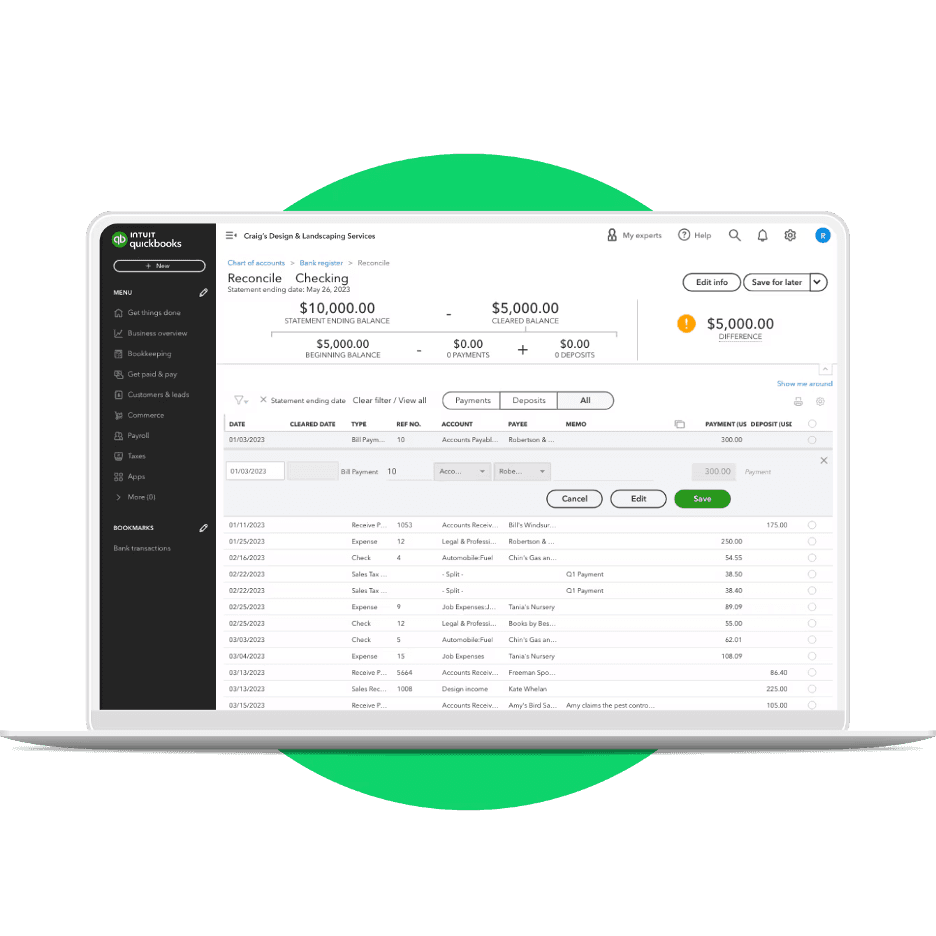
Bank reconciliation is a key productivity tool offered by most accounting software. Source: QuickBooks
Financial Reporting
Every accounting program generates financial reports. Some are more basic than others, and some require you to subscribe to a higher plan for advanced reporting. If you need specific types of financial reports, make sure they’re included in the program and plan you choose. Detailed reports can help you interpret your financial data to make informed business decisions.
Integrations
The ability to connect your accounting software to the other business programs you use saves you the time of manually transferring data from one system to another. Highly rated payroll services, payment processing platforms, top point-of-sale systems and customer relationship management software are some popular types of integrations you may want to look for. Integration with systems you already use also cuts down on training time for employees.
Tracking for Billable Hours
If you’re a consultant or your business is an agency that bills clients by the hour, you want accounting software that allows you to track and bill your time or integrates with the time-tracking program you already use. This is an especially important feature for freelancers.
Inventory Management
If you have a retail or distribution business, you’ll want accounting software that tracks inventory and helps with purchase ordering. You may need to subscribe to a top-tier plan to get this feature. If you need more advanced inventory features, the best inventory software options feature a dedicated inventory management system.
Mobile Apps
Not every accounting and invoicing program has mobile apps, but the best ones do. However, there is quite a bit of variance in app capabilities. Some can capture receipts for expense tracking only, several allow you to create and send invoices, and others have almost every feature the web-based software does. As mobile work becomes increasingly convenient, it’s worth verifying that a company offers a mobile app with its software.
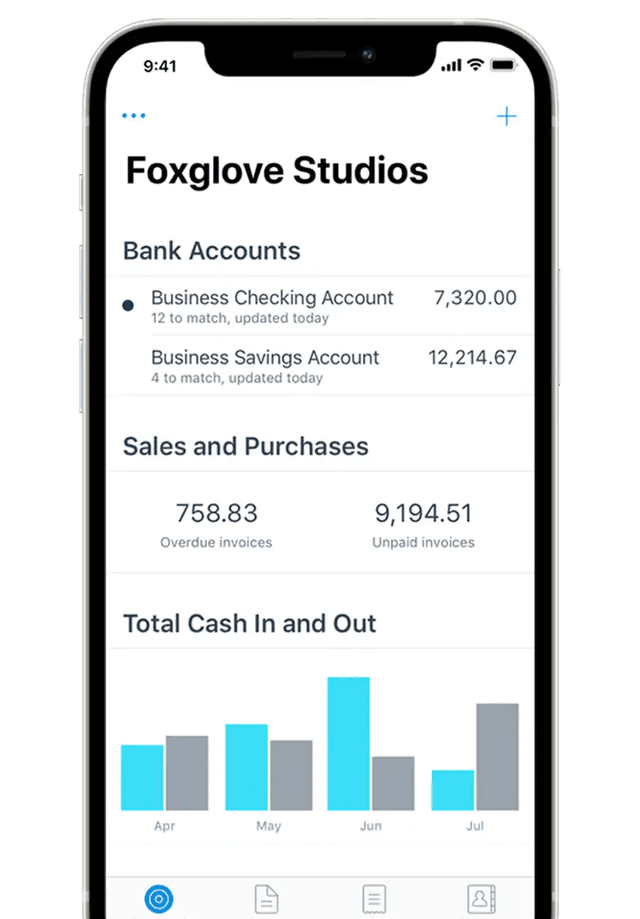
Mobile apps allow you to perform accounting functions on the go. Source: Xero
Project-Based Billing
Firms, freelancers and consultants who work with clients on projects or jobs should look for accounting software that helps them track tasks and budgets. The software should allow you to invoice customers for tracked time and rebill them for project expenses.
Support for Multiple Businesses
Several programs we reviewed allow you to add more than one business to your account, though some of them charge extra for this convenience.
Properly managing your business’s finances is no small task. The right accounting software can take a lot of pain out of the process. Here are several key advantages to using accounting software.
Organized Finances
An individual may be able to manage their personal finances on the fly, but recording transactions haphazardly and relying on bank statements won’t cut it for a business owner. But small businesses need to keep all their finances organized to prevent any negative surprises. Accounting software can help achieve that. It organizes and stores your financial data in one central location. Many time-consuming accounting processes can be automated, eliminating the likelihood of mistakes.
Cost-Effective Solutions
Accounting software doesn’t have to be one of your biggest expenses. There are several price points that meet the needs and budgets of small businesses. We’ve highlighted free solutions too. Many are easy to set up and don’t have a steep learning curve, which means you can learn the software quickly and start managing your business’s finances.
Compliance With Tax Laws
Trying to configure business taxes can be extremely overwhelming for small business owners. Accounting software takes the guesswork out of filing taxes. Many of these programs calculate sales tax and prepare and file a variety of tax forms. That frees you to concentrate on running your business.
Did You Know?Did you know
The Section 179 deduction allows businesses to deduct the full purchase price of qualifying assets they financed during the tax year.
Improved Internal Controls
Internal controls are the procedures and measures implemented by an organization to ensure the integrity of accounting and bookkeeping. Accounting software can help prevent and detect fraud by increasing the reliability of your controls. This can reduce the probability of theft and loss of assets.
The accounting software market is poised to continue growing as more businesses adopt cloud-based accounting programs. With more businesses adopting a hybrid work arrangement, the need for cloud-based services is still on the rise. Many accounting software providers have moved to a software-as-a-service model, and we expect this will continue into 2024.
According to market research from Fortune Business Insights, the accounting software market is poised to reach $20.4 billion in 2026, up from $11 billion in 2018. The industry continues to focus on making accounting software more accessible and user-friendly. Given the increasing preference for smartphones over desktops, we expect more providers to start offering mobile-first solutions and dedicated apps.
AI and machine learning are gaining popularity, with many accounting applications implementing these advanced technologies to reduce manual data entry and automate redundant tasks. Analysis from Vantage Market Research found a growing demand for automation in accounting, fueling the need for more AI capabilities to be built into accounting software. We expect this trend to continue in 2024 as the accounting profession seeks to reduce human error and increase productivity.
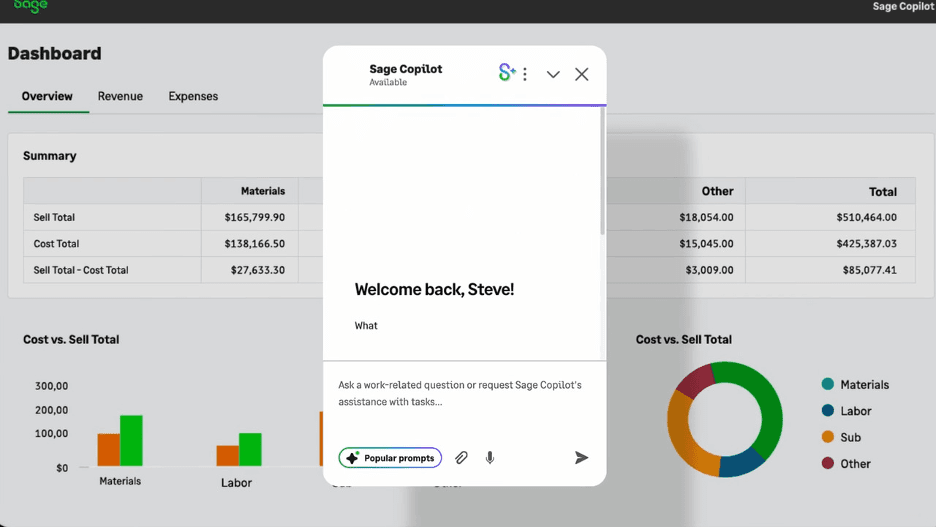
Accounting software providers are now incorporating chatbots into their technology. Source: Sage
We also see analytics as another major trend in the accounting industry. Professional accountants are increasingly taking on the responsibility of analyzing data and communicating business results and trends to managers and clients. Many accounting software services now offer data analysis and visualization tools, and we expect those functions to expand and grow in importance over the coming years.
Reporting features are also becoming increasingly important in a globalized world. More tax authorities are imposing real-time reporting requirements. These real-time reports contain details about your company’s profits and losses, and AI technology increasingly powers this feature. We think business owners will seek software providers that support these new regulations.